What Drywall Repair Means in a City Like Columbia
Drywall repair in Columbia is not one job. It is a doorknob hole in a rental off Rosewood, a ceiling seam that has split open in Forest Acres, a whole wall of water-damaged drywall in Cayce, and a plaster wall in Elmwood Park that somebody patched with drywall in 1991 and did badly. What they have in common is that the wall has to end up flat, the texture has to match what surrounds it, and a painter has to be able to roll straight across the drywall repair without seeing where it starts.
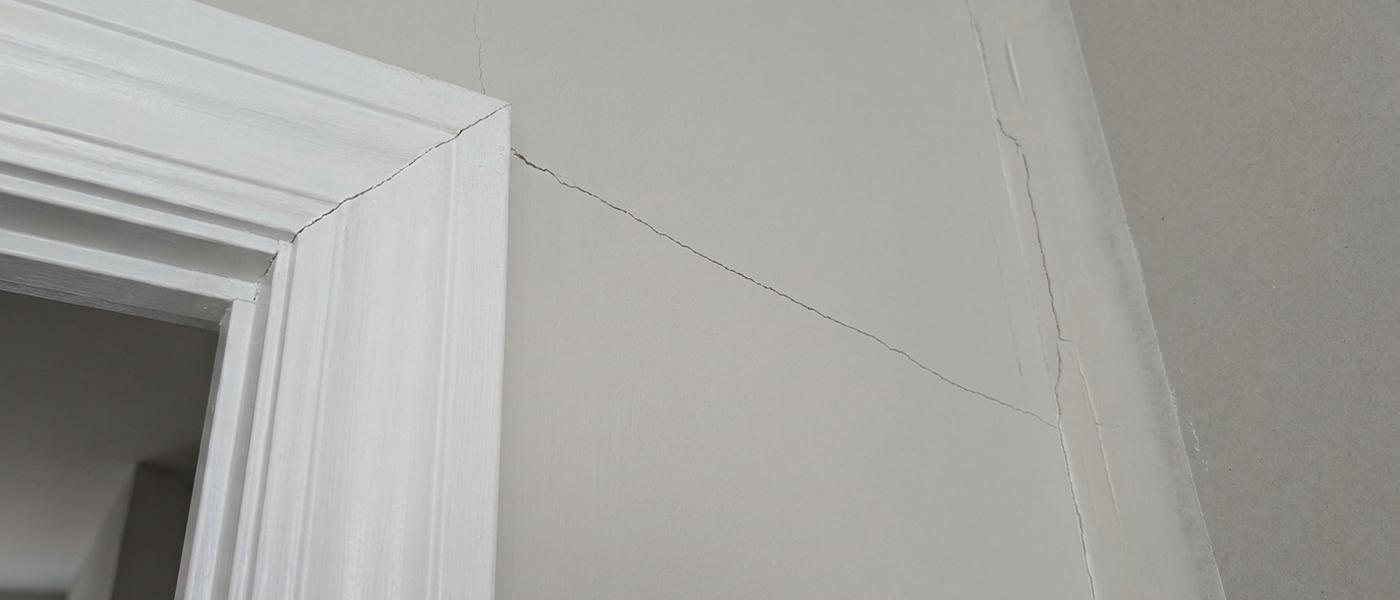
Columbia has 62,021 housing units, and 30,676 of them, 49.5%, were built before 1980. That one number explains most of the drywall repair work in this city. A wall that has stood through fifty or sixty South Carolina summers has moved. Seams taped flat in 1966 have opened. Nail heads have worked their way back out through the paint. Corner bead has been knocked loose by four decades of furniture. None of it is a structural emergency, and all of it is a drywall repair.
The age spread is wide. About 18,869 Columbia homes, 30.4% of everything standing, were built before 1960, and 6,095 of them, 9.8%, date to 1939 or earlier. Another 19,300 units went up between 1950 and 1979, the decades when gypsum board replaced plaster as the default wall in American housing. So a drywall contractor working Columbia is not working one kind of wall. In Elmwood Park, Cottontown, Earlewood or Waverly you are as likely to open up plaster over wood lath as drywall. In Dentsville, Woodfield, Killian or out toward Lake Carolina it is half-inch board and paper tape. The drywall repair is different in each, and quoting one as if it were the other is how homeowners end up with a patch that never quite matches.
Columbia Is a Majority-Renter City, and Drywall Repair Follows the Leases
Here is the fact that makes Columbia different from almost every other city its size. 28,914 of the 53,076 occupied housing units inside the city are rented. That is 54.5%: Columbia is a majority-renter city. Across Richland County the figure is 39.7%, or 66,738 renter-occupied homes. The city also holds 7,536 units in buildings of fifty apartments or more.
Two institutions drive that. The University of South Carolina's Columbia campus sits in the middle of the city, and Fort Jackson, inside the city limits, is the largest and most active Initial Entry Training centre in the U.S. Army, running roughly 50% of the Army's Basic Combat Training load and about 60% of the women entering the Army each year, in excess of 48,000 basic trainees annually. Between the students and the military, a very large share of Columbia housing changes hands every single year.
For drywall repair that matters more than it sounds. Every lease that ends is a walk-through, and every walk-through finds anchor holes, doorknob dents, scuffed corner bead and a hole somewhere that a picture used to hide. Turnover drywall repair is the most repeated job in this city, and it is the one job a homeowner-facing drywall contractor tends to be worst at scheduling. There is a whole page on it: rental turnover and commercial drywall repair.
Why Columbia Drywall Fails: Water, Heat and Movement
Columbia sits at the fall line where the Broad River and the Saluda River meet to form the Congaree, in a humid subtropical climate that delivers roughly 44 inches of precipitation in a normal year with July average highs near 91 to 92 degrees. Drywall is gypsum pressed between two sheets of paper. It is very good at being a wall and very bad at being wet.
That is why so much Columbia drywall repair starts on a ceiling rather than a wall. In a climate this hot and humid, the quiet causes do most of the damage: an air handler in a hall closet whose condensate pan has rusted through, a supply duct sweating in a July attic, a roof flashing that weeps half a cup of water a week. None of them announce themselves. They show up months later as a brown ring on a ceiling, and by then the paper facing on the back of the board has already let go.
And then there is the flood. Between 1 and 5 October 2015, the Columbia Metro Airport recorded 8.74 inches of rain in 24 hours, an all-time record for any month, and the city broke its wettest one-day, two-day and three-day records at once. The gage on Gills Creek at Forest Acres read 15.51 inches in twelve hours. The Congaree River at Columbia peaked at 31.81 feet, carrying an estimated 185,000 cubic feet per second. Nineteen people died across the state, more than 20,000 residents were displaced, and nearly fifty regulated dams failed or were breached, at least forty-five of them in Richland and Lexington counties, including five along the Gills Creek watershed. Homes along those creeks were still having drywall replaced a year later. Not because drywall repair is slow, but because a roof and a foundation get fixed first, and the water they already let in stays a drywall problem for a long time afterwards.
Plaster, Lath and the Older Neighbourhoods
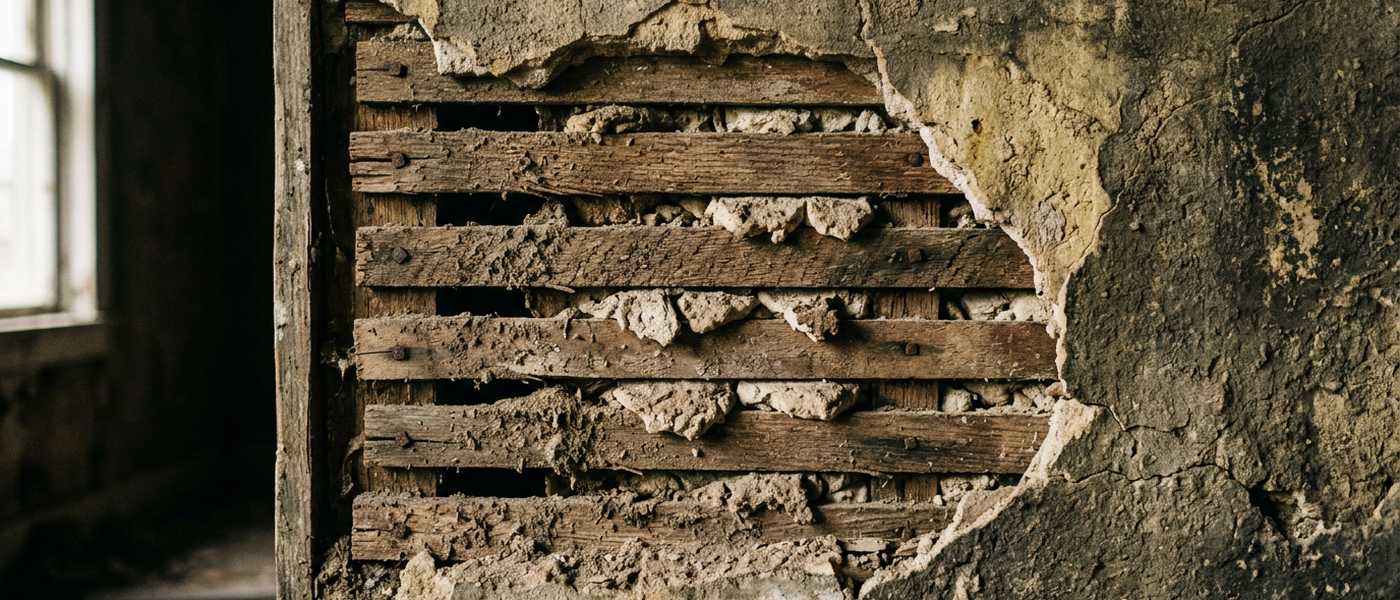
Roughly one Columbia home in ten predates 1940, and those walls are plaster over wood lath rather than drywall. It matters because the failure mode is completely different. Drywall cracks along its seams. Plaster fails when the keys, the blobs of wet plaster that were squeezed between the lath strips and hold the whole wall on, break off the back. You can skim the surface of a plaster wall beautifully and have it come off again in a year because nothing addressed the keys.
The usual repair is to cut the failed plaster back to sound material, set in a drywall patch shimmed out to the plaster's thickness, then blend the joint. Done properly it is permanent and invisible. Done as a straight drywall patch with no allowance for the depth difference, it telegraphs a shadow line across the wall the first time low afternoon sun comes through the window. This is ordinary work in Elmwood Park, Cottontown, Earlewood, Waverly, Shandon and Melrose Heights, and it is the single most common reason a cheap drywall repair in an older Columbia house looks wrong.
Do You Actually Need a Licensed Drywall Contractor in South Carolina?
This is the part worth knowing before you call anyone, including us. South Carolina sets two dollar thresholds in Title 40, Chapter 59 of the state code, and most small drywall repair sits underneath both of them.
- Undertaking of $500 or less. No residential specialty contractor registration is triggered. A single patched hole, a cracked seam, one small ceiling stain: a lot of drywall repair lives here. If a drywall contractor tells you a $300 patch legally requires a state licence, that is a sales line, not the rule.
- Undertaking over $500. Section 40-59-20(7) defines a residential specialty contractor as an independent contractor doing construction work, repairs, improvement or reimprovement requiring special skills and specialised trades when the undertakings exceed five hundred dollars. Drywall falls under the general Residential Specialty Contractor registration that SC LLR issues, rather than one of the separate trade licences it issues for electrical, heating and air, and plumbing. Section 40-59-220(A) requires that registration before the work.
- Cost of the undertaking over $5,000. Section 40-59-20(6) puts anyone who constructs, superintends or offers to construct or superintend the construction, repair, improvement or reimprovement of a residential building into Residential Builder territory, and 40-59-30(A) requires that licence first. Whole-house drywall repair after a flood or a fire routinely crosses this line.
Ask which band your drywall job falls into, and ask to see the registration or licence number if it needs one. It takes thirty seconds and it is the single most useful question a Columbia homeowner can ask a drywall contractor. Insurance is a separate question and it matters at every price: the independent provider who takes your job carries general liability cover, and you are entitled to ask for the certificate before work starts.
How a Drywall Repair Actually Goes
Most people have never watched drywall repair happen and assume it is one visit. It is usually three short ones, because joint compound has to dry between coats and there is no way to hurry that without the drywall repair cracking later.
- Look and quote. The damage gets sized, the texture gets identified, and the cause gets found. A drywall repair over an unfixed leak is money thrown away.
- Cut and hang. Damaged drywall is cut back to the centre of the framing on each side so the new board has something solid to fasten to. Backing gets added where there is none.
- Tape and coat. Paper tape is bedded in compound, then two or three progressively wider coats feather the drywall repair out over a foot or more of the surrounding wall.
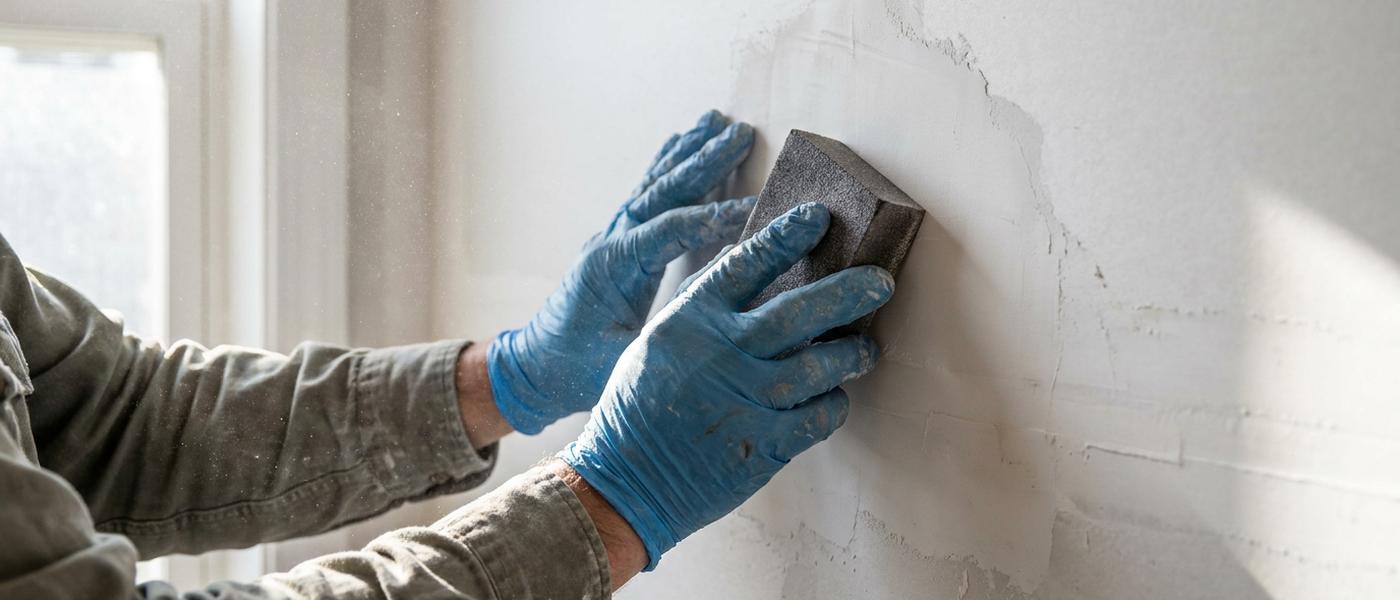
- Sand, texture, blend. The patch is sanded flat, the matched texture goes on, and the drywall repair is left primed and ready for your painter.
Drywall Repair Across the Midlands
Drywall repair is dispatched across Richland and Lexington counties and out through the Midlands: Columbia, Forest Acres, Arcadia Lakes, West Columbia, Cayce, Springdale, Irmo, Seven Oaks, St. Andrews, Harbison, Dentsville, Woodfield, Killian, Blythewood, Lexington, Chapin, Red Bank, Oak Grove, Pine Ridge, Gaston, Hopkins and Elgin, and out as far as Camden, Winnsboro and Batesburg-Leesville when the job is worth the drive. Richland County alone holds 422,117 people and 187,611 housing units; the Columbia metro area reaches 849,181 people and 378,275 housing units, of which 43,565, about 11.5%, are mobile homes with their own set of wallboard quirks. The drywall repair itself does not change when you cross a county line. The drive time does, so say where you are when you call.