The Four Ceiling Drywall Repair Problems Columbia Calls About
Almost every ceiling drywall repair in this city is one of four things, and knowing which one you have tells you roughly what the drywall repair will cost and how long it will take.
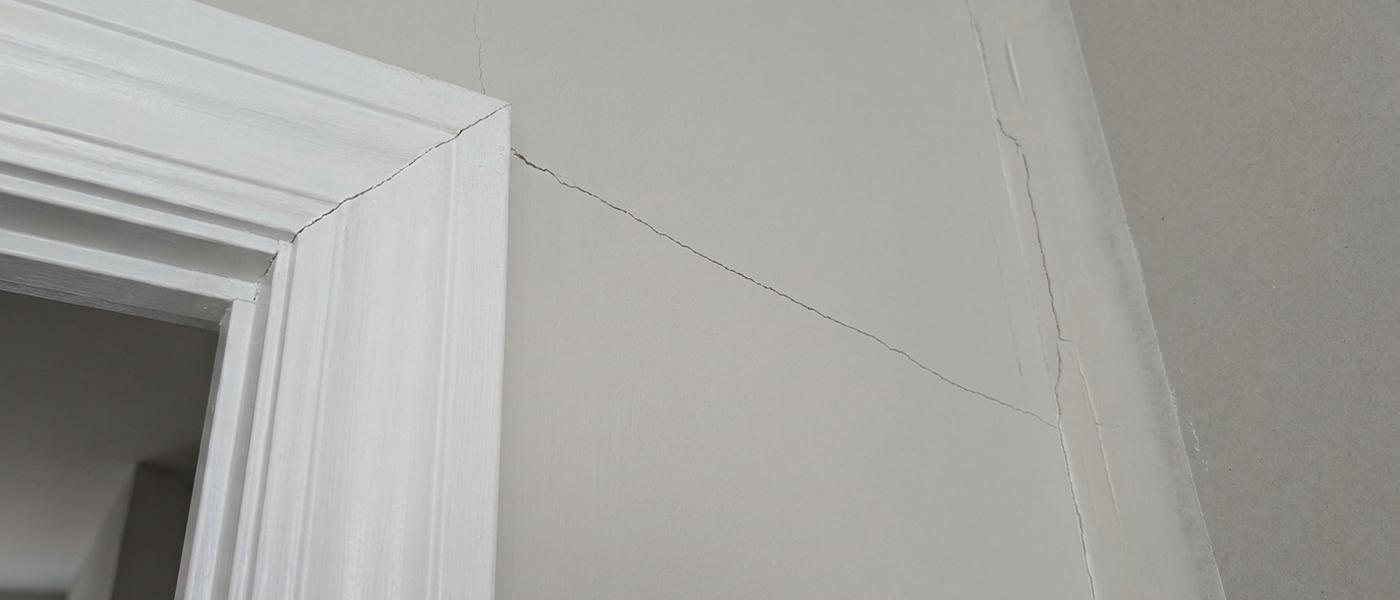
- A straight crack along a joint. The paper tape at a butt joint or a wall-to-ceiling angle has released. This is the most common ceiling drywall repair in Columbia, and it turns up constantly in the 19,300 homes built here between 1950 and 1979, where the original tape is now older than most of the people living under it.
- A brown ring or a yellow halo. Water has been through the ceiling drywall. See water damage drywall repair, because the stain is the symptom and the source is the job.
- Sag between the joists. Fasteners pulled through, or wet drywall lost its stiffness, or the board was hung with too few screws in the first place. Sagging is the one ceiling drywall repair that should never be patched from below.
- A drywall patch somebody else left. A visible rectangle where a previous drywall repair was never textured, or never feathered wide enough to disappear.
Why Ceilings Punish a Rushed Drywall Repair
A wall is lit softly and viewed straight on. A ceiling is lit by raking light coming sideways out of a window or downward out of a fixture, and raking light finds every high spot, every low spot and every place a knife stopped. That is the whole reason ceiling drywall repair costs more than the same square footage on a wall.
Gravity is the second reason. Joint compound on a ceiling wants to fall off, so each coat goes on thinner and takes longer to dry, and a drywall repair that a wall would tolerate in two coats needs three overhead. The third is simply handling: a piece of half-inch board on a ceiling has to be held up while it is fastened, and the fasteners have to hit joists that are sixteen or twenty-four inches apart and invisible from below.
Cut It Out and Re-Tape: the Ceiling Drywall Repair That Lasts
The most common bad ceiling drywall repair in Columbia is a crack filled with compound and painted over. It looks perfect for about four months. A crack along a taped joint means the tape has delaminated, so filling the visible gap leaves the failed tape underneath, and the joint keeps moving. The drywall repair that lasts is to cut the tape out to sound material, bed new paper tape in compound, then feather two or three coats wide enough that no shadow line survives.
Where a section has been wet or is sagging, the board comes out entirely, back to the centre of a joist on each side so the new piece has something solid to screw to. Blocking gets added where the cut falls between joists. Then the drywall repair is taped, coated, sanded and textured like any other.
Popcorn, Stomp and the Ceiling Drywall Columbia Actually Has
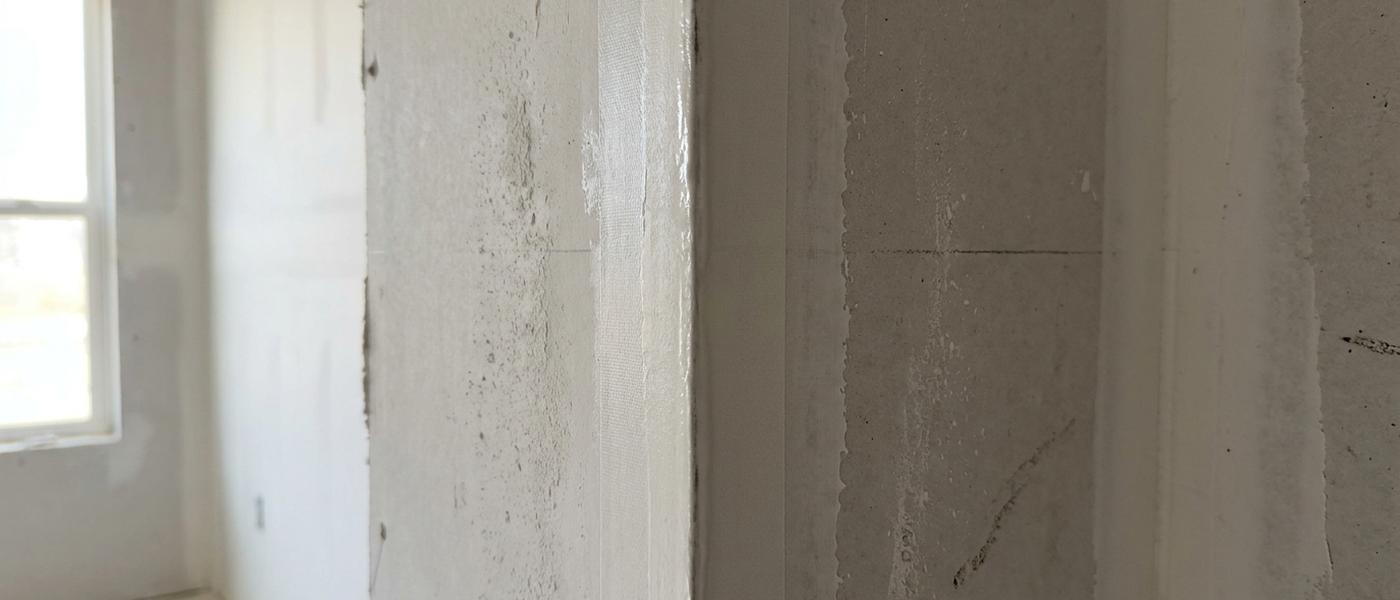
Columbia ceilings run the full range, and the texture on yours decides how fussy the drywall repair is going to be. Smooth in the newer subdivisions out toward Blythewood and Lake Carolina. Knockdown and orange peel through most of the 1980s and 1990s stock in Irmo, Seven Oaks and Woodfield. Popcorn and stomp patterns across a great deal of the 1960s and 1970s housing. Matching a stomp brush pattern is a genuine craft: the mix, the brush, the pressure and the timing all change the result, which is why the match gets built on a sample board and held against your ceiling before anything is sprayed.
One honest limit. This site makes no claim about what is in an older ceiling texture, does not test for asbestos, and does not arrange abatement. If your home is old enough for that question to matter, have the material tested independently before any ceiling drywall repair disturbs it. That is a separate specialism and it belongs with a specialist.
Drywall repair is dispatched across Richland and Lexington counties and out through the Midlands: Columbia, Forest Acres, Arcadia Lakes, West Columbia, Cayce, Springdale, Irmo, Seven Oaks, St. Andrews, Harbison, Dentsville, Woodfield, Killian, Blythewood, Lexington, Chapin, Red Bank, Oak Grove, Pine Ridge, Gaston, Hopkins and Elgin, and out as far as Camden, Winnsboro and Batesburg-Leesville when the job is worth the drive. Richland County alone holds 422,117 people and 187,611 housing units; the Columbia metro area reaches 849,181 people and 378,275 housing units, of which 43,565, about 11.5%, are mobile homes with their own set of wallboard quirks. The drywall repair itself does not change when you cross a county line. The drive time does, so say where you are when you call.